Disclaimer:
This content is provided for informational and educational purposes only and is not intended as a substitute for professional medical advice, diagnosis, or treatment. Always seek the guidance of a qualified healthcare professional with any questions you may have regarding a medical condition or health concern.
Why Smart Shopping Starts with the Food Label
In today's fast-paced world, making healthy food choices can feel like navigating a minefield. The grocery aisle, brimming with countless packaged food options, presents a constant stream of decisions. Understanding the information presented on food labels is no longer just a niche concern for health enthusiasts; it's a fundamental skill for anyone seeking to improve their well-being, manage their budget, and make informed food choices. With nearly 80% of U.S. adults regularly using the Nutrition Facts panel on food labels when making purchasing decisions [Economic Research Service, 2023], mastering this skill is essential. This guide will demystify the often-intimidating world of food labeling, transforming you into a confident and savvy shopper.
Beyond the Hype: Making Informed Food Choices with Food Labels
The allure of attractive food packaging and enticing marketing claims can easily steer shoppers toward less healthy options. However, food labels serve as your primary tool for cutting through the marketing noise. They are regulated disclosures from food manufacturers designed to provide crucial details about a food product's contents, nutritional value, and potential allergens. By understanding these labels, you gain the power to actively choose what you consume, rather than passively accepting what is presented. This proactive approach can lead to significant improvements in overall health, as studies have shown that food labeling can reduce calorie and fat intake, as well as unhealthy food choices [American Journal of Preventive Medicine, 2025].
The Power of Knowledge: How Understanding Food Packaging Empowers You
Food packaging is the primary vehicle for conveying information about a food product. While visually appealing, its true value lies in the data it presents. Decoding this data allows you to make proactive decisions that align with your health goals, dietary needs, and even your budget. Consumers are increasingly relying on private-label products, often found on store shelves with detailed food labels that are just as informative as name brands [eMarketer, 2025]. This underscores the universal importance of understanding how to read and interpret the information presented, regardless of brand. Empowered by knowledge, you can confidently select items that nourish your body and support your well-being.
What This Guide Will Teach You
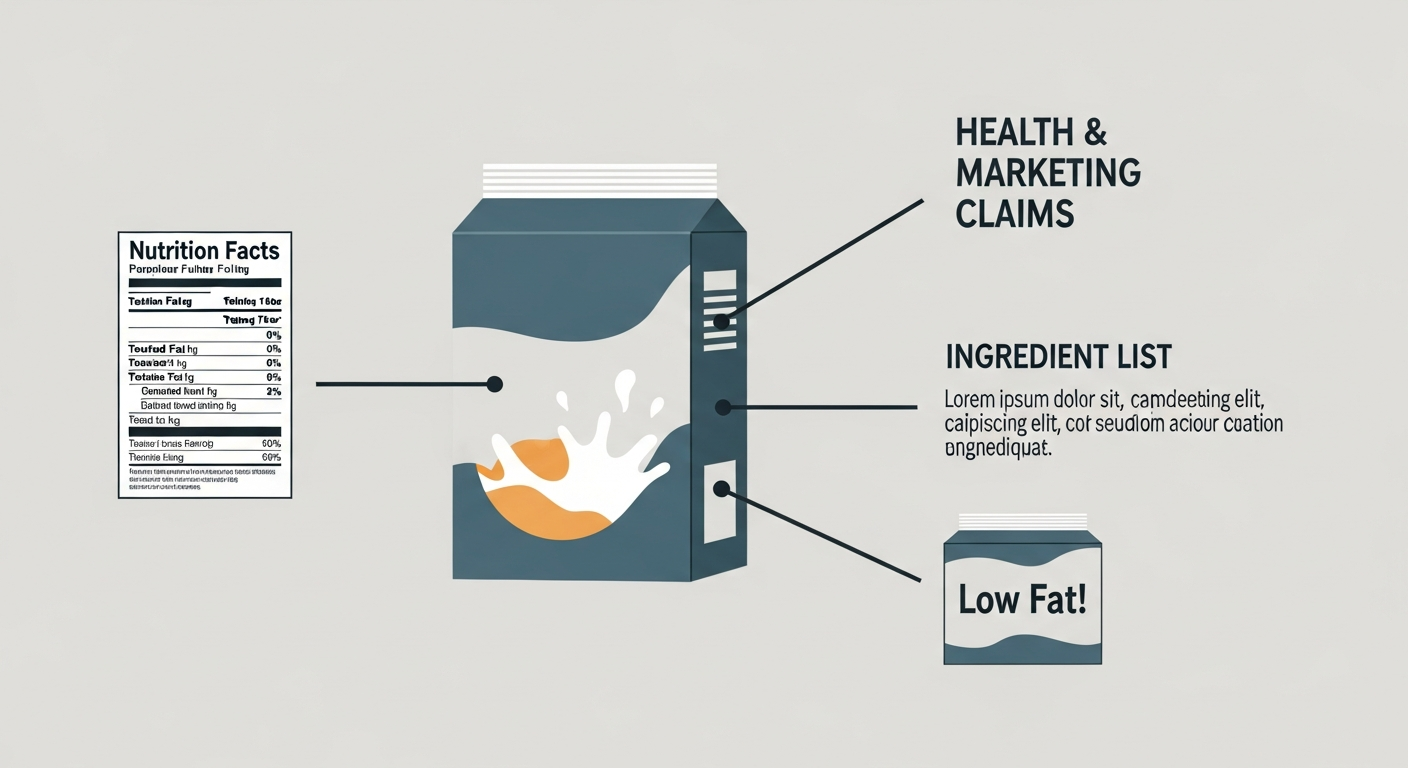 This guide will break down the key components of a food label to help you make informed choices.
This comprehensive guide will equip you with the essential knowledge to confidently read and interpret food labels. We will dissect the Nutrition Facts label, demystify ingredient lists, clarify misleading health claims, and highlight vital information on food packaging. By the end of this guide, you will be empowered to make smarter food choices, compare products effectively, and navigate the grocery store with newfound confidence.
Decoding the Nutrition Facts Label: Your Go-To Guide for Healthy Choices
The Nutrition Facts label is the cornerstone of readable food labels. Mandated by the Food and Drug Administration (FDA), this standardized panel provides a wealth of information designed to help consumers make informed dietary decisions. Understanding its components is the first step toward mastering smart shopping.
Understanding the Foundation: What is the Nutrition Facts Label?
The Nutrition Facts label is a standardized table found on most packaged food and beverages sold in the United States. Its primary purpose is to provide consumers with consistent and easy-to-understand information about the nutritional content of a food product. This includes key nutrients, calories, and the serving size, all crucial for understanding how a particular food fits into a balanced diet. The Food and Drug Administration oversees these regulations to ensure accuracy and consistency for consumers.
The Golden Rule: Always Start with the Serving Size
Before looking at any other number on the Nutrition Facts label, always pay close attention to the serving size. This is the foundation upon which all other nutritional information is based. The serving size is listed in common household measures (like cups or pieces) and in metric units (grams). It's critical to understand that the serving size is not a recommendation of how much you should eat, but rather how the product's nutritional information has been standardized. Many consumers underestimate their actual portion sizes, leading to an inaccurate understanding of their calorie and nutrient intake. If you consume double the listed serving size, you should double all the nutrient values and calories for that product.
Calories: Your Energy Snapshot
Calories represent the amount of energy you get from a serving size of a food product. Understanding calorie content is essential for managing weight and maintaining an energy balance. The Nutrition Facts label clearly displays the total calories per serving. Generally, a product with 40 calories per serving is considered low, 100 calories is considered moderate, and 400 calories or more is considered high. It’s important to consider the calorie density of foods, especially when trying to manage your intake.
Essential Nutrients: What to Look For (and Limit)
The Nutrition Facts label highlights several key nutrients. Among those to look for and encourage are protein and fiber. Protein is vital for building and repairing tissues, while fiber supports digestive health. Conversely, you'll want to limit nutrients like sugars (particularly Added Sugars), sodium, saturated fat, and trans fat. High intake of these can contribute to various health problems. The label provides gram amounts for these, which we'll discuss further in relation to the % Daily Value.
The % Daily Value (%DV): Your Nutritional Compass
The % Daily Value (%DV) is a helpful tool for assessing the nutrient content of a food product relative to a standard daily diet. It indicates whether a serving of food contributes a little or a lot of a particular nutrient. A general guideline is that 5% DV or less of a nutrient per serving is considered low, and 20% DV or more is considered high. This allows for quick comparisons, helping you identify foods that are good sources of beneficial nutrients like fiber and protein, or those that are high in nutrients you might want to limit, such as Added Sugars and sodium.
Beyond the Numbers: Mastering the Ingredient List
While the Nutrition Facts label provides quantitative data, the ingredient list offers qualitative insight into what actually makes up the food product. This section is often overlooked but is critically important for understanding the true nature of what you are consuming.
Order Matters: From Most to Least Abundant
Ingredients are listed on the ingredient lists in descending order by weight. This means the ingredient listed first is the most abundant, and the one listed last is the least abundant. This simple rule is a powerful tool for understanding the primary components of a food product. If sugar or high-fructose corn syrup is listed among the first few ingredients, it indicates a significant presence of added sweeteners, even if the "Total Sugars" on the Nutrition Facts label seem moderate.
Unmasking Hidden Ingredients: What to Watch Out For
The ingredient lists are where you can uncover less desirable components. Be particularly vigilant about sugars. They appear under many different names, including sucrose, glucose, fructose, corn syrup, high-fructose corn syrup, maltose, dextrose, molasses, and anything ending in "-ose." Identifying these multiple forms of sugars is key to understanding the Added Sugars content, which is now often listed separately on the Nutrition Facts label. Similarly, watch for artificial flavors, colors, preservatives, and excessive amounts of sodium.
Prioritizing Whole Foods: Looking for Recognizable Ingredients
A good indicator of a healthier food product is an ingredient list composed of recognizable, whole foods. For example, when looking for whole grains, you should see terms like "whole wheat flour," "oats," "brown rice," or "quinoa" listed prominently. Avoid products where the ingredient list reads like a chemistry experiment with many unpronounceable names. This is especially relevant for plant foods; looking for recognizable plant foods as primary ingredients signifies a more natural and potentially healthier choice.
The Role of Food Manufacturers and Their Transparency
Food manufacturers are obligated to provide accurate ingredient lists and nutritional information, but their presentation can sometimes be strategically designed to highlight positives and downplay negatives. Understanding this dynamic encourages a more critical approach to label reading. While the FDA regulates what appears on labels, it’s up to consumers to actively seek out and interpret the information presented. Some food manufacturers are embracing greater transparency, offering more detailed information about sourcing and ingredients, but vigilance remains key.
Understanding Food Claims: Separating Fact from Marketing Hype
Food packaging is often adorned with claims designed to attract consumers. These claims can range from nutrient content to potential health benefits, but it’s essential to understand their precise meaning and regulatory basis.
Nutrient Content Claims: What "Low Fat," "High Fiber," and "Good Source Of" Really Mean
Nutrient content claims describe the level of a nutrient or dietary ingredient in a food product. For instance, "low fat" means the product contains 3 grams or less of fat per serving and no more than 30% fat. "High fiber" indicates that the product contains 5 grams or more of fiber per serving. A "good source of" claim signifies that one serving provides 10-19% of the Daily Value for a particular nutrient. These claims offer a quick reference but should always be verified against the Nutrition Facts label and the ingredient lists.
Health Claims: Connecting Food Components to Disease Reduction
Health claims describe a relationship between a substance in a food product and a reduced risk of a disease or health-related condition. For example, "diets low in saturated fat and cholesterol may reduce the risk of heart disease." These claims are rigorously reviewed by the Food and Drug Administration to ensure they are supported by scientific evidence. It’s important to remember that these claims relate to a dietary pattern, not a single food item, and the effectiveness of such claims can be influenced by other factors, such as how consumers perceive taste relative to health benefits [University of Florida, 2025].
Structure/Function Claims: "Supports Immune Health" or "Builds Strong Bones"
Structure/function claims describe the role of a nutrient or dietary ingredient in affecting the normal structure or function of the human body. Examples include "calcium builds strong bones" or "antioxidants may protect cells from damage." Unlike health claims, these do not require pre-market approval from the FDA, and the manufacturer is responsible for ensuring the claims are truthful and not misleading. They cannot claim to diagnose, treat, cure, or prevent any disease.
Special Dietary Claims: Navigating Specific Needs
Special dietary claims cater to individuals with specific dietary needs or preferences. This includes claims like "gluten-free," "vegan," "vegetarian," or "lactose-free." For individuals with conditions such as gluten sensitivity, these labels are vital for safety. The FDA has established definitions for many of these claims to ensure consistency and prevent consumer confusion. When you see these labels, they indicate the food product meets specific criteria for that particular dietary requirement.
Essential Details: Allergens, Dates, and More on Your Food Package
Beyond the nutritional breakdown and marketing claims, food packaging contains other crucial information that impacts safety and quality.
Food Allergens: Always Check for the "Contains" Statement
One of the most critical pieces of information on any food package is the allergen declaration. Major food allergens, such as milk, eggs, fish, shellfish, tree nuts, peanuts, wheat, and soybeans, must be clearly identified. Look for a "Contains" statement, usually found near the ingredient list, which explicitly lists any of these allergens present in the food product. This is non-negotiable for anyone with a diagnosed allergy or gluten sensitivity.
Date Labels Decoded: "Best By," "Use By," and "Sell By"
Date labels can be confusing. "Best By" or "Best if Used By" indicates when a food product is expected to have the best quality, but it is still safe to consume after this date. "Use By" dates are typically found on highly perishable items like infant formula, and indicate the last date recommended for peak quality. "Sell By" dates are for store inventory management and help track stock rotation. Understanding these differences helps reduce food waste while ensuring safety.
Other Important Information on Food Packaging
Your food package may also include information like the net weight or volume of the product, the manufacturer's name and address, country of origin, and sometimes even QR codes that link to more detailed information online. While not directly nutritional, this information can be useful for product identification, customer service, or further research into the food product.
Applying Your Knowledge: Smart Shopping Strategies
Armed with the knowledge of how to read food labels, you can transform your grocery shopping experience from a chore into an empowering activity.
Comparing Products: How to Choose Wisely Between Similar Items
When faced with multiple options for the same type of food product, food labels become your best friend. Compare the Nutrition Facts labels for serving size, calorie count, Added Sugars, sodium, fiber, and protein. Examine the ingredient lists to see which product uses more recognizable ingredients and fewer fillers or sweeteners. This comparative approach ensures you select the option that best aligns with your health goals.
Reading Labels for Specific Dietary Goals
Whether your goal is weight management, increasing protein intake, reducing sugars, or managing a condition like gluten sensitivity, labels provide the roadmap. For weight management, focus on calorie density and nutrient-rich, lower-calorie options. To increase protein, look for products where protein is a primary ingredient and listed prominently on the Nutrition Facts label. For those managing sugars, scrutinize ingredient lists for various sugar names and check the Added Sugars line on the Nutrition Facts label.
Avoiding the Pitfalls: Common Marketing Tricks on Food Packages
Food manufacturers sometimes use clever marketing tactics. Be wary of "health halos" created by appealing imagery or claims on the front of the food package that may not be fully supported by the Nutrition Facts label or ingredient lists. "Natural" claims, for instance, are not always strictly defined. Always cross-reference front-of-package claims with the detailed information on the back to make truly informed food choices.
The landscape of food labeling is continuously evolving. Regulations are updated to reflect new scientific understanding and consumer demands. For example, the requirement for Added Sugars on the Nutrition Facts label is a relatively recent change aimed at helping consumers manage sugar intake. Consumers are also increasingly interested in sustainability, with a significant portion of consumers considering sustainability factors important in food purchasing decisions, though current labels don't always adequately address this [NSF, 2025]. Staying informed about changes from bodies like the Food and Drug Administration will ensure you remain at the forefront of smart shopping.
Post a Comment